Cotton: It's different varieties and applications in fashion.
As summertime comes around we approach our annual reminder that the wool blends of the winter and the denim of the spring are no longer suitable and cotton must reclaim its rightful place in our closets once more.
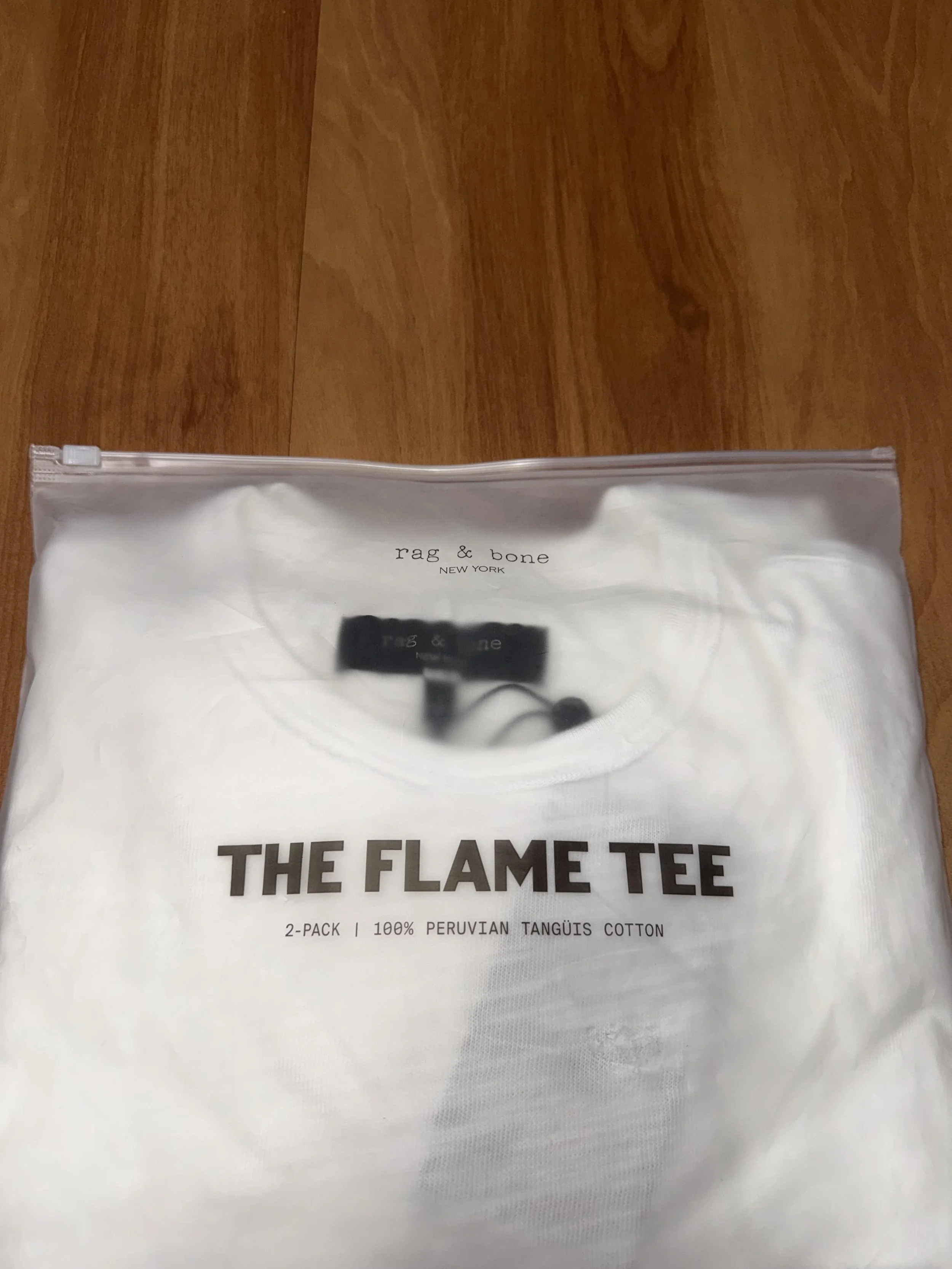
It’s a classic , from your childhood graphic tees to your matured “going-out” shirts you’ll see cotton on the label. However it seems that every other garment you find now boasts a 100% cotton makeup which begs the question : what kind of cotton is it that we’re actually wearing ? Surely there’s a difference in quality in the 20$ target tee vs the 200$ department store piece, (One of our favorites from rag and Bone featured below)
When one t-shirt stays breezy all afternoon, another suffocates you as the midday sun comes up, and cotton jeans induce mild heatstroke, we find this inquiry to be a crucial one to surviving the summer months. Unsurprisingly the fiber used is not the issue at hand , our expectation of one fiber acting as one fabric is.
Myth : 100% cotton means summer ready
Not automatically. Cotton identifies the fiber, but that fiber can become a lightweight jersey, an open piqué, or a dense twill. Construction, weight, lining, and cut determine how the finished garment wears. Once you look beyond the percentage on the label, the differences make sense. Jersey, piqué, poplin, chambray, Oxford cloth, seersucker, twill, and denim can all be made from cotton. However they don’t carry the same weight, hold the same shape, or move the same way on the body.
That’s the real question for summer clothing: not simply whether a garment is cotton, but what kind of fabric that cotton became. Cotton variety matters, too. American Upland is the dominant variety in the United States, whilst Peruvian Pima has extra-long staple fibers that can be spun into finer yarns with a smoother hand and softer drape. I can appreciate the distinctive qualities of the two, but I wouldn’t buy a heavy Pima shirt for a July heatwave and pretend the premium label magically makes it breathable.
MYTH: Pima cotton always feels cooler.
Pima's extra-long staple fibers can be spun into finer yarns and may give a fabric a smoother hand or softer drape. The variety alone, however, does not guarantee a lightweight garment. Pima can still become a dense fabric. (I love certain types of pima cotton shirts such as the t-shirts from Vince or Rag and Bone.
Above the waist, cotton has an easier job. Take jersey, the fabric of the classic T-shirt. Its knitted loops give it natural stretch, which is why a good cotton tee moves with you and disappears into the day. The catch is the weight. One jersey tee might feel paper-thin, while another wears like a sweatshirt before you even step outside. Cotton also readily absorbs moisture. That can feel comfortable at first, until the fabric gets damp and stays that way. It doesn’t turn every cotton tee into a quick-drying performance piece, as many of these are actually plastic disguised with a name like Polyester. Then there is piqué, which adds texture and a little more structure. I like that a polo looks more polished than a T-shirt without crossing into button-up shirt territory. But I always want to feel the fabric first, because a fine piqué and a heavy piqué can look nearly identical from a far yet feel entirely different on the body. Although at times with cotton mesh you can see the difference in a photograph and it could be from miles away.
COMMON ERROR: treating every cotton knit alike
Jersey comes in a wide range of weights. Piqué varies in density and texture, too, and some constructions-such as single piqué-show more open space than others. A thick jersey or dense piqué will wear very differently from a lighter version. Woven cotton is another matter. Poplin and chambray usually offer more structure than jersey, but they don’t have the same natural stretch. This is where fit does the heavy lifting. A relaxed shoulder, an open collar, and a roomier cut through the body matter just as much as the fabric itself . That is the same logic behind [the summer outfits I already reach for] (https://www.downsstyle.com/look-book/2021/6/14/outfits-that-will-keep-you-cool-this-summer).
Oxford cloth is the one I scrutinize most. A lightweight Oxford can work beautifully in the heat, whilst a thicker one feels as though it belongs in another season’ wardrobe entirely. Voile, lawn, and gauze can be lighter still, but a sheer shirt may be fully lined or require a base layer. I always check the inside before exciting myself on finding a lightweight piece.
COMMON ERROR: shopping by fabric name alone
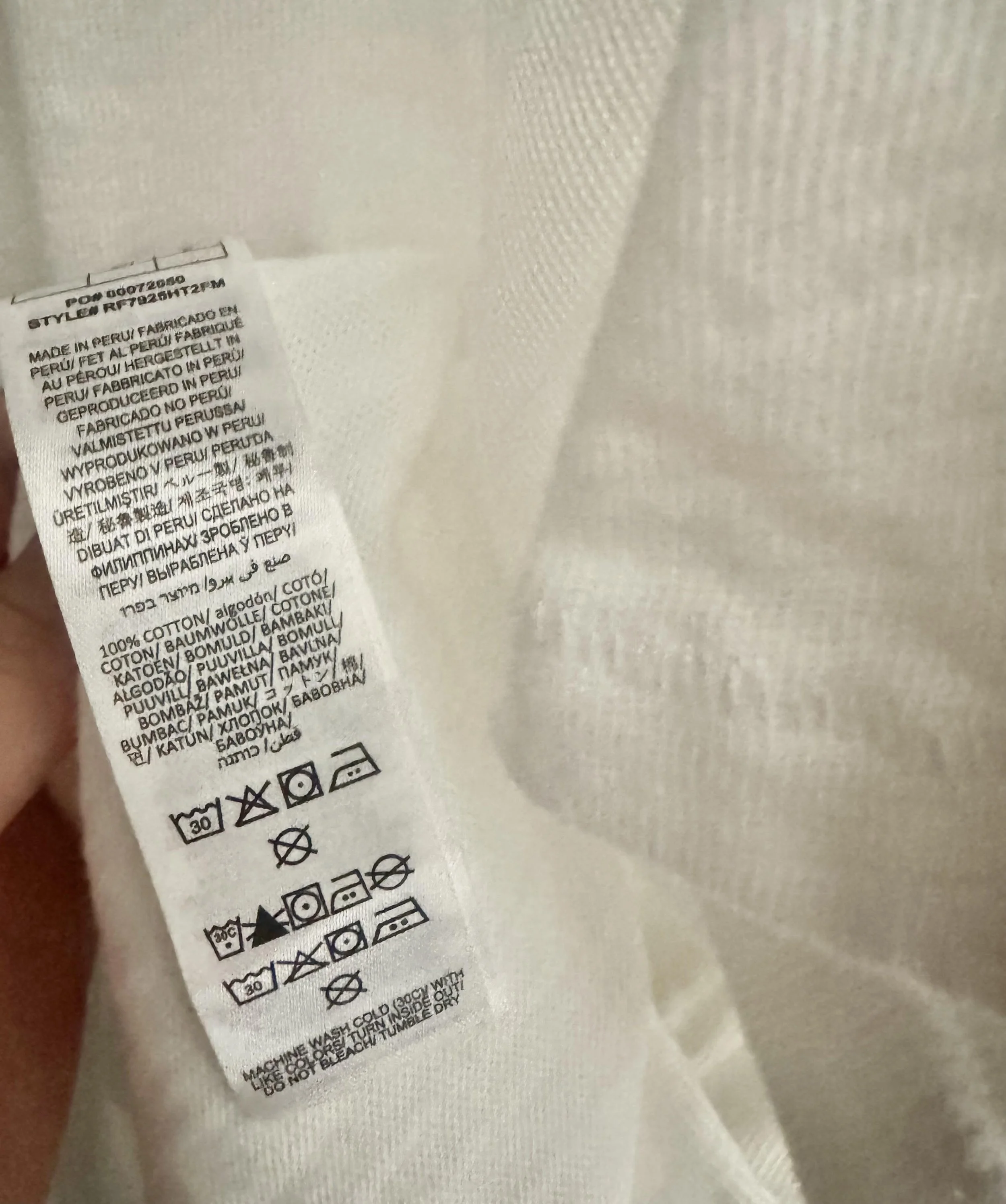
Poplin, chambray, Oxford cloth, and even very light cottons vary in weight, density, cut, and lining. The name gives you a category, not an answer. My favorite cotton top isnt simply the one with the right fabric name on the product page. It’s the shirt whose weight and cut work together without forcing an extra layer I didn’t plan to wear. (See this garment tag below but also consider the texture you see in the image from the fabric and its sheerness)
Then cotton has to work as pants or shorts, below the waist, cotton has to work harder. Pants and shorts have to accommodate pockets, seams, movement, and opacity while retaining enough structure to hold their shape. The lightest cloth does not necessarily do all of that well. Twill gives many chinos their familiar diagonal weave and structured appearance. Because it can be woven at many different weights, one pair may feel breezy while another feels like armor. For summer, I look for a lighter twill with a roomier leg. That extra space is not only about staying cool. It’s part of [how I judge proportion and fit] (https:// www.downsstyle.com/look-book/2024/7/5/how-to-dress-for-your-body-type), even before I consider the temperature.
MYTH: Cotton chinos automatically work as summer pants
Chinos are commonly made from twill, a construction often used for more substantial bottom-weight fabrics. A lighter cloth and roomier cut can make a major difference. The cotton percentage cant do that alone. Seersucker has more personality. Its puckered surface gives the fabric its character, but I still check the label and the interior. Seersucker describes a construction method, not a guaranteed fiber content, light weight, or unlined finish.
MYTH: Seersucker guarantees cool
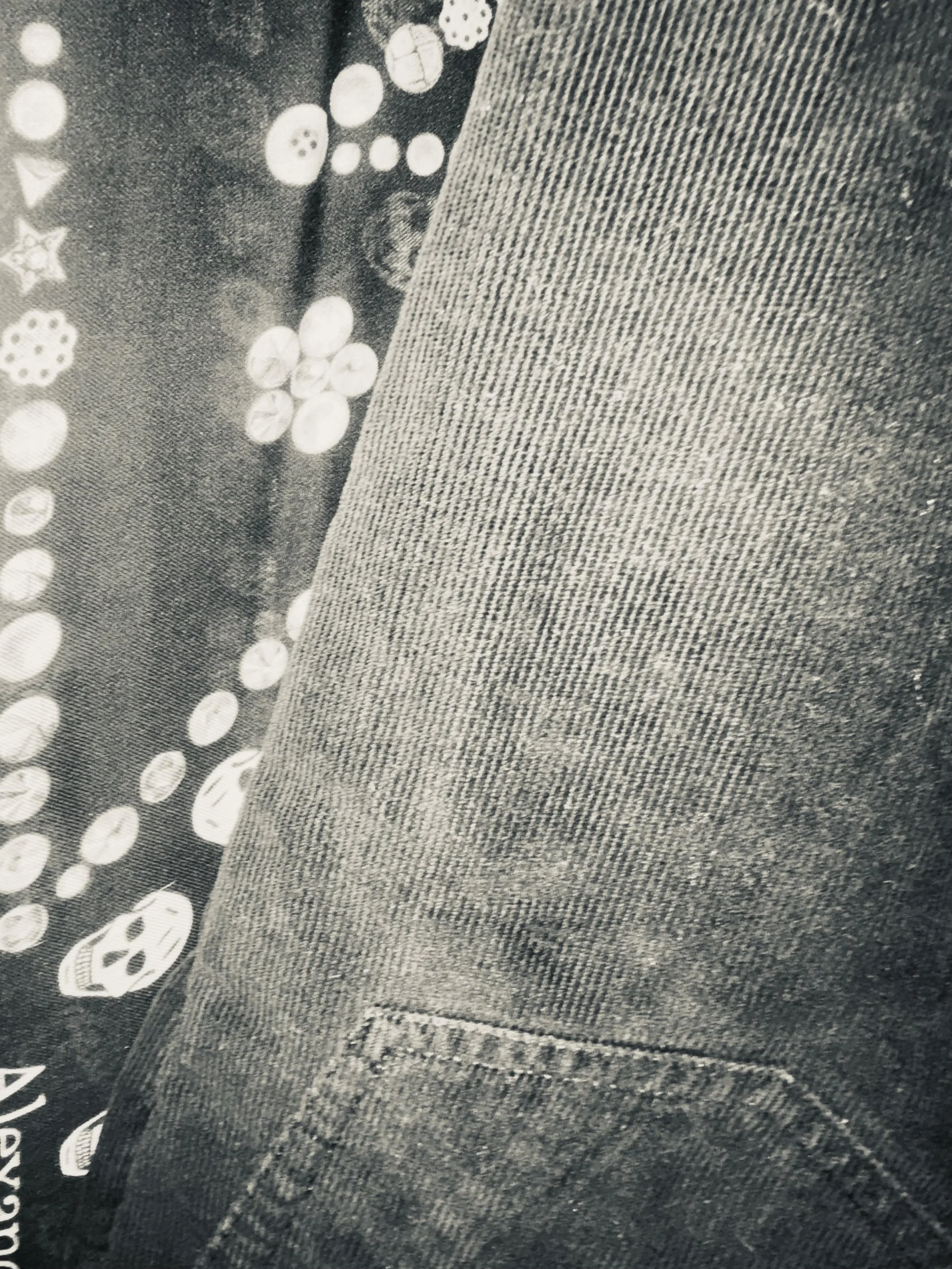
Seersucker describes a puckered construction, not a promise that every garment will feel cool. It is not a guarantee of any particular fiber content, either. Check the label, weight, lining, and cut before purchasing your next piece and you might keep it in your closet for longer. Denim makes the difference especially during the summer as it seems like some pants breathe better than others. Cotton Inc notes that denim used for tops often weigh between 3.5 and 8 ounces per square yard, while denim used for jeans, pants, and jackets usually falls between 8 and 16.5 ounces. That range explains why a pair of loose, lightweight denim shorts can make perfect sense in July, while rigid 14-ounce jeans are still exactly what they feel like: heavy jeans. (See below a 97% cotton 3% elastane blend more suitable for the fall from Acne Studios)
COMMON ERROR: calling all denim one weight.
Lightweight jersey shorts solve one problem and introduce another. They feel easy, but they also read as completely casual. Sometimes softness is the whole point. Other times, I need the bottom half of my outfit to maintain a sharper silhouette. A top can prioritize movement. Bottoms still need enough structure to hold their shape without carrying more fabric than the weather calls for.
What I check before I buy a tag reading "100 percent cotton" is the starting point, not the final answer. I have to pick up the garment. I pinch the fabric, check for hidden linings, see whether it stretches or holds firm, and gauge how much breathing room the cut leaves around the body. I also inspect the seams, pockets, and finish. Those details help explain [why the quality of our clothes has changed] (https://www.downsstyle.com/look- book/2024/7/24/ uwy46xpteq1xpy5hmnav5dtyvOdl6k), and they tell me whether a summer piece is genuinely built for repeated wear. Next, I ask what the day requires. If I’m working out or need something to stay, standard absorbent cotton is not the way to go.
MYTH: Absorbent means quick-drying
Absorbency and fast drying are not the same property. Ordinary cotton can hold moisture. Cotton engineered for moisture management is a separate category and should be identified as such. But for lunch excursions, a day at the desk, errands, and times when I want my clothes to look like clothes instead of athletic equipment, cotton gives me endless options.
So, is cotton good for summer? Yes, when the fabric and the weight of the garment make sense. The fiber label simply has not earned the last word. On top, I usually start with a lighter jersey or a relaxed woven shirt. Below the waist, I look for light twill, unlined seersucker, or denim that genuinely feels light in my hand. It all comes back to [why I wear linen in summer] (https://www.downsstyle.com/look-book/2024/7/1/ why-l-only-wear-linen-in-the-summer): the label matters, but the finished garment decides whether I will keep reaching for it.
Silk gets the next chance. It carries almost the opposite reputation: luxurious, delicate, and supposedly too complicated for real heat. But charmeuse does not get to speak for the whole family, either. Before we move on, take a look at the cotton you already own. Which piece stays comfortable all day, and which one do you regret putting on by noon? That’s the day to day application we’re interested in.